How to use our lessons?

Level 0 PRE-BEGINNER

Ages 4–7

What students should already know before starting Level 0:

Nothing required – this is the true beginner stage.


What students will learn in Level 0:

  • Alphabet sounds (phonics: A–Z)
  • Recognize and say basic vocabulary words 
  • Numbers 1–10
  • Colors and shapes
  • Simple greetings (Hello, Goodbye, My name is …)
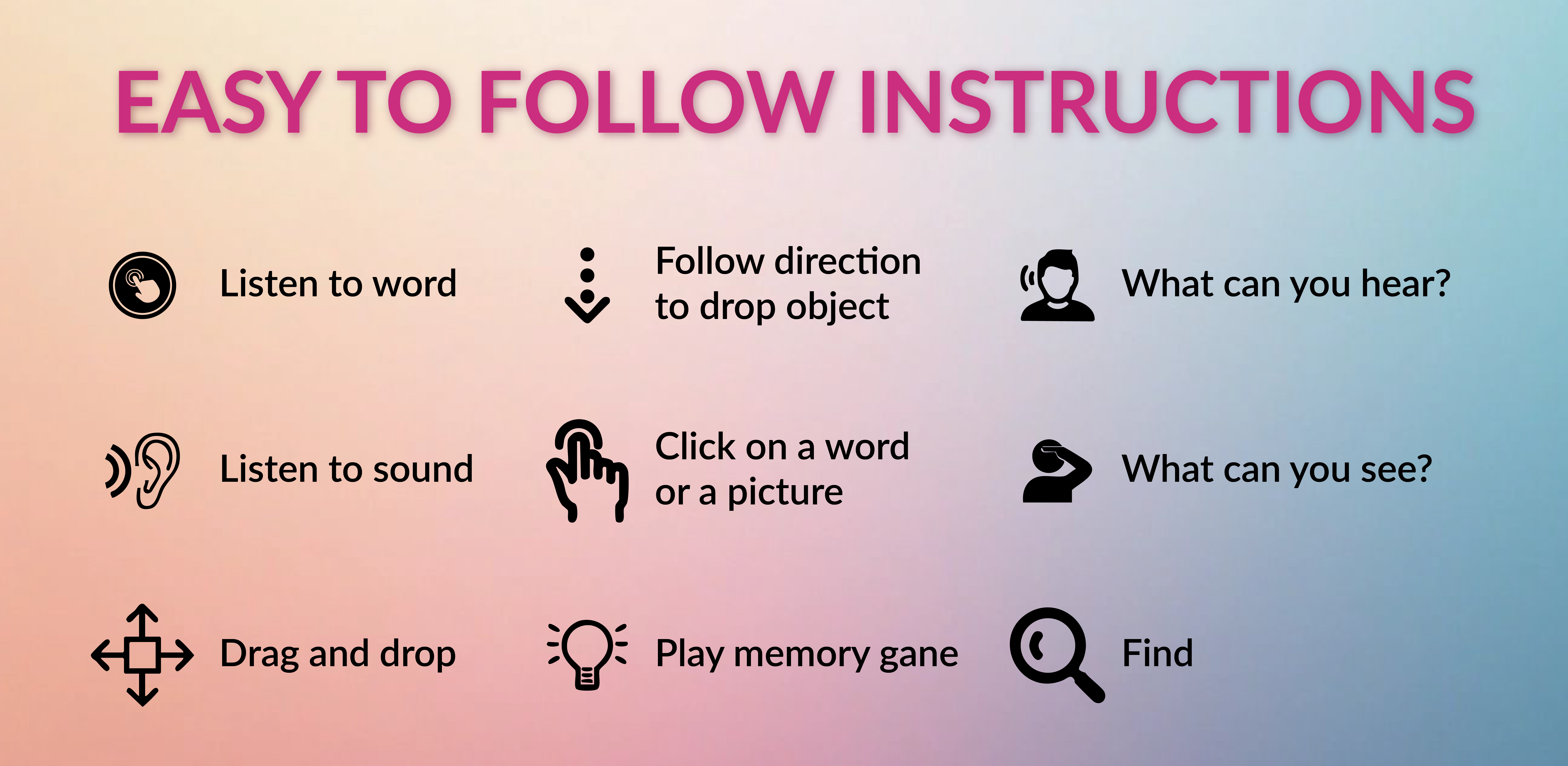
  • Very basic instructions 


Prior knowledge needed to move to Level 1:

  • Can say  alphabet A–Z
  • Can say numbers 1–10
  • Can greet: “Hello. My name is ___.”
  • Can name classroom objects, colours, numbers, family members, clothes, animals etc.

Level 1 BEGINNER

Ages 7–9

What students should already know before starting Level 1:

Assessment lessons are provided to help identify the best level for each student to start.


  • Alphabet letters and sounds
  • Numbers 1–10
  • Basic greetings
  • Basic vocabulary


What students will learn in Level 1:

  • Numbers 1–10
  • Colours
  • Time o’clok
  • Soft ‘c’ Hard ‘c’
  • a/an
  • Capital letters
  • Names of seasons/Days of the week
  • This/That/These/Those
  • Can/Can’t
  • Body & Face
  • Sport
  • Transport 
  • I am from
  • Jobs
  • Common nouns (family, food, animals, toys)
  • Basic verbs in present simple (run, jump, eat, drink, play)
  • Sentence patterns: “I have ___.” / “This is a ___.”
  • Pronouns: I, you, he, she, it, they, we

Prior knowledge needed to move to Level 2:

  • Can introduce self and family: “This is my mother.”
  • Can count 1–20
  • Can ask/answer simple questions (What’s this? How old are you?)
  • Can use 20–30 basic nouns and 10 verbs

Level 2 HIGH BEGINNER

Ages 8–10

What students should already know before starting Level 2:

Assessment lessons are provided to help identify the best level for each student to start.

  • Basic nouns and verbs
  • Numbers 1–20
  • Introduce self and family


What students will learn in Level 2:

  • Numbers up to 100
  • Telling Time
  • Adverbs of frequency
  • Food, hobbies, daily routine vocabulary
  • Countable & uncountable nouns (some/any, a lot of, not many, not much)
  • There is (isn’t)/There are (aren’t)
  • Present continuous (“I am eating”)
  • Role plays: at the restaurant, shopping, hobbies
  • Home – rooms and furniture
  • Simple reading (short stories, poems)
  • Transport
  • Directions
  • My Body and Face
  • Jobs
  • Word families (–at, –ight, –ake, est)
  • Simple past tense
  • Future with ‘going to’


Prior knowledge needed to move to Level 3:

  • Can describe daily routine (I wake up, I eat breakfast)
  • Can ask/answer about food, hobbies, and likes/dislikes
  • Can use There is/There are correctly
  • Knows at least 100–150 words

Level 3 PRE-INTERMEDIATE

Ages 9–11

What students should already know before starting Level 3: 

Assessment lessons are provided to help identify the best level for each student to start.

  • Basic grammar (present simple/continuous, some/any, there is/are)
  • Vocabulary about food, family, hobbies, daily routines


What students will learn in Level 3:

  • Numbers up to 1,000
  • Past simple (I played, I went, I saw)
  • Future with “will” (I will play, I will eat)
  • Comparatives & superlatives (bigger, biggest)
  • Adjectives to describe people, places, and things
  • Storytelling (yesterday, last week, tomorrow)
  • Longer role plays (at the park, at the doctor, at school)


Prior knowledge needed to move to Level 4:

  • Can tell a short story in past tense (Yesterday I played football.)
  • Can use future with will (Tomorrow I will go to school.)
  • Can compare things (This dog is bigger than that cat.)
  • Vocabulary: 300–400 words

Level 4 INTERMEDIATE

Ages 10–12+

What students should already know before starting Level 4:

Assessment lessons are provided to help identify the best level for each student to start.

  • Present simple/continuous, past simple, future will
  • Comparatives and superlatives
  • Vocabulary about food, hobbies, school, routines


What students will learn in Level 4:

  • Present perfect (“I have eaten.” “She has visited London.”)
  • Past continuous (“I was playing when…”)
  • Future with going to (“I am going to study.”)
  • More complex questions (How long…? Have you ever…?)
  • Writing short paragraphs (My holiday, My best friend, My favorite food)
  • Extended reading (short stories, simple poems, comic strips)
  • More advanced role plays (traveling, shopping, visiting a friend, phone calls)


Prior knowledge after Level 4:

  • Can use present, past, and future with some accuracy
  • Can read and understand short stories
  • Can write 5–6 sentence paragraphs
  • Vocabulary: 500–600+ words